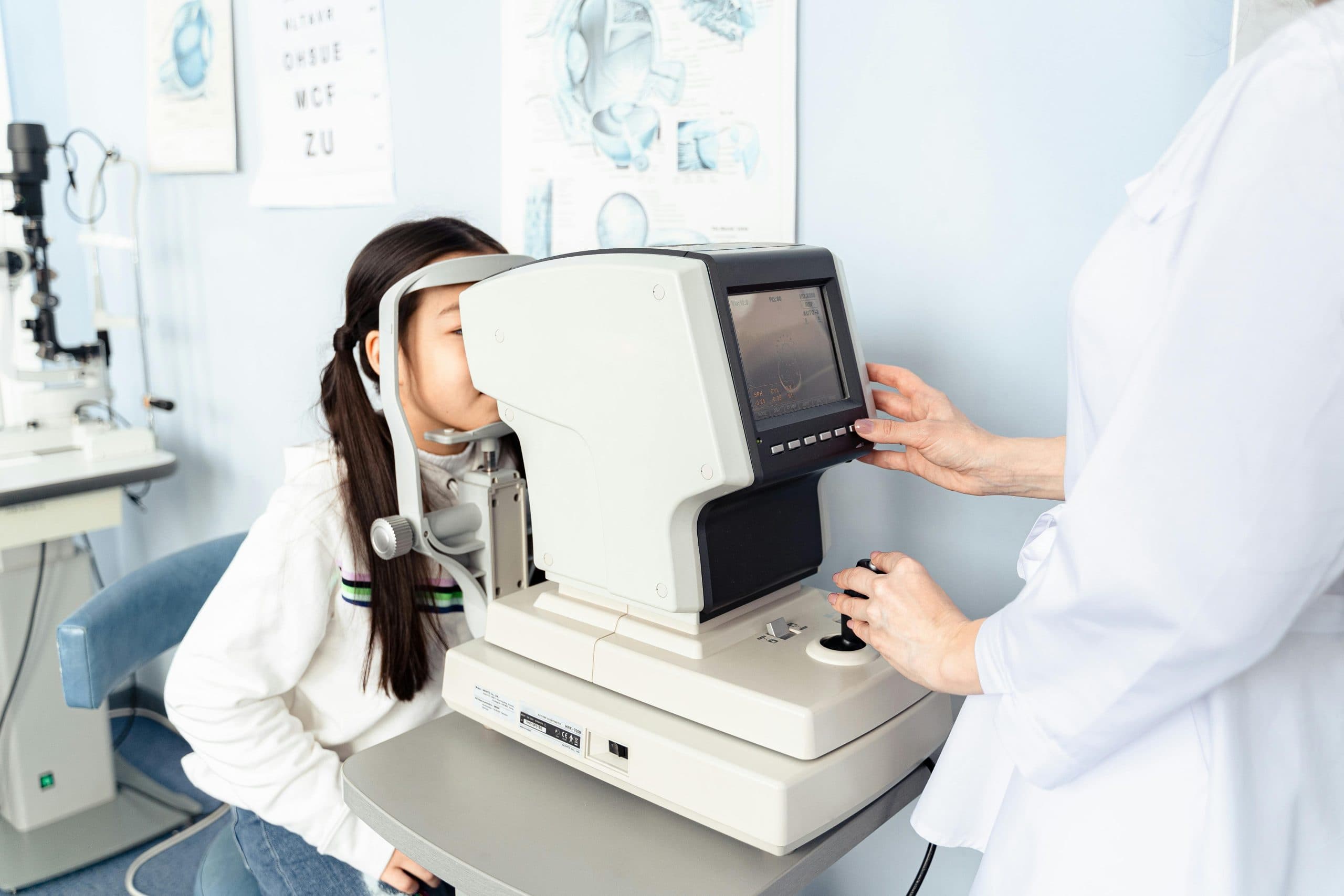
Child having an eye exam for myopia management at Mill Creek Family Eye Center

Mill Creek, WA

Myopia Management for Kids in Mill Creek, WA

Is your child's prescription getting stronger every year? Our optometrists specialize in evidence-based treatments that slow myopia progression and protect your child's long-term eye health.

Book a Myopia Consultation

Why Myopia Management Matters

Myopia (nearsightedness) is a global epidemic — and it's accelerating. Children are developing myopia younger and progressing faster than ever, largely due to reduced outdoor time and increased near work. By the time they reach adulthood, many children have high myopia that significantly raises their risk of serious eye disease.

At Mill Creek Family Eye Center, we offer the latest myopia management therapies to slow this progression. Our goal isn't just clearer vision today — it's healthier eyes for life.

Our Myopia Management Options

Most Popular

Stellest Lenses

Revolutionary spectacle lenses with H.A.L.T. technology shown to slow myopia progression by up to 67%. No overnight wear — just regular glasses with a powerful therapeutic benefit.

No Daytime Lenses

Orthokeratology (Ortho-K)

Custom-designed contact lenses worn overnight that temporarily reshape the cornea, providing clear daytime vision without glasses while slowing myopia progression.

Clinically Proven

Atropine Therapy

Low-dose atropine eye drops have strong clinical evidence for slowing myopia progression with minimal side effects. Often combined with other therapies for enhanced effect.

FDA-Cleared

Multifocal Soft Contact Lenses

FDA-cleared soft daily disposable lenses — including MiSight and NaturalVue — worn during the day. Their dual-focus or extended depth-of-focus design creates peripheral defocus that slows eye elongation and myopia progression in children.

Start Your Child's Myopia Management Journey

Early treatment has the greatest impact. Schedule a myopia consultation with Mill Creek Family Eye Center today.

Myopia Management FAQs

What is myopia management for children?
Myopia management uses evidence-based treatments to slow the progression of nearsightedness in children. Unlike standard glasses that only correct vision, myopia management therapies — like Stellest lenses, orthokeratology, and atropine — actively slow the elongation of the eye that drives myopia progression.
At what age should myopia management start?
The earlier, the better. We typically begin myopia management when a child is diagnosed with myopia, often between ages 6–12. Younger children tend to have more rapidly progressing myopia, so early intervention yields the greatest long-term benefit.
What is Stellest lens therapy?
Stellest is a spectacle lens with a unique H.A.L.T. (Highly Aspherical Lenslet Target) design that provides clear vision while creating a peripheral defocus signal shown to slow myopia progression by an average of 67% in clinical trials. It's worn like regular glasses — no inserts or overnight wear required.
What are multifocal soft contact lenses for myopia control?
Multifocal soft contact lenses like MiSight 1 day and NaturalVue are daily disposable lenses designed to slow myopia progression. MiSight is FDA-cleared for myopia control in children ages 8–12. Both use a dual-focus or extended depth-of-focus design that provides clear vision while simultaneously creating peripheral defocus to reduce the signal that drives eye elongation. They're worn during the day and discarded nightly, making them a convenient and comfortable option.
Is myopia management covered by insurance?
Treatment is not typically covered by insurance. All pricing and fees will be reviewed at the Myopia Management Consult so there's never any surprises.
What happens if myopia is not managed?
Untreated progressive myopia can lead to high myopia (prescription over -6.00D), which significantly increases the lifetime risk of retinal detachment, glaucoma, cataracts, and myopic macular degeneration. Slowing progression now reduces these long-term risks.
Book Appointment